Fit for Purpose: results from alternative sonar mapping platforms

Ray Valley(a) and Eli Kersh(b)

(a) BioBase Product Expert and Aquatic Biologist

(b) BioBase Ambassador, Certified Lake Manager, and President of LakeTech Inc.

The term “Fit for Purpose” has recently become a popular term in our circles in the context of mapping and surveying water bodies, and it refers to utilizing the appropriate equipment, methods, and budget for the task at hand.

This principle acknowledges that one type of equipment and method may not be suitable for every scenario. For instance, whether you’re assessing the storage volume of municipal stormwater ponds or maintaining a river channel for commercial navigation, the required level of accuracy will and should be different. While high accuracy and precision may be crucial for certain projects, it might not be necessary for others.

Continue reading “Fit for Purpose: results from alternative sonar mapping platforms”

Weeds and Seagrass: mysterious and underappreciated treasures of the sea

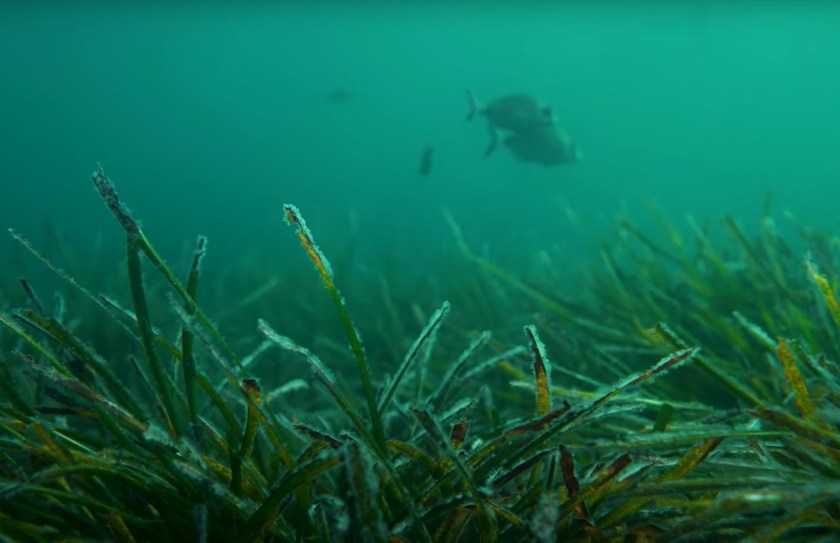
Given the disdain for the word “weed,” it’s not surprising that seaweed gets such little respect in most developed human cultures. But, we are finding seaweed and its rooted cousin seagrass hold immeasurable value for the future of humankind. Time to get to work mapping it!

Seagrasses are considered vascular plants and have roots, stems, leaves, and flowers. According to a report from the United Nations in 2020, there are more than 70 species across the globe covering over 300,000 km2 (which is likely a vast underestimate) making them one of the most widespread coastal habitats.

Figure 1. Posidonia seagrass growing off the Mediterranean Coast of Spain. See us map it

Continue reading “Weeds and Seagrass: mysterious and underappreciated treasures of the sea”

What Sonar Do I Need for BioBase Mapping? – Updated

What kind of sonar hardware should I buy for BioBase Mapping is the most common question we are asked. Admittedly, continual change in technology, products, and features can be intimidating and sometimes confusing. With this blog, we focus on what you need to know to get started with BioBase. We start with the Portable BioBase Kit – an off-the-shelf portable solution that has everything you need

Continue reading “What Sonar Do I Need for BioBase Mapping? – Updated”

BioBase Troubleshooting Lowrance Sonar and GPS Source

Too commonly we get files uploaded from customers that had either no sonar information or no GPS location in the file. This is typically due to some unit malfunction or user oversight of a disabled setting. If there is no GPS position or no sonar depth in the file, not surprisingly BioBase cannot create a map.  Here we show some of the most common troubleshooting tips and tricks that will help you diagnose common issues with newer generation Lowrance and get you back to BioBasing on the water.

Continue reading “BioBase Troubleshooting Lowrance Sonar and GPS Source”

What Is BioBase?

What Is BioBase?

What is BioBase? BioBase uses off-the-shelf sonar technology and automatic cloud processing to create professional bathymetry, bottom composition, and aquatic vegetation maps. BioBase removes the labor intensive and high cost elements of acquiring high quality data very quickly so you can focus your efforts on aquatic resource management.

Continue reading “What Is BioBase?”

Professional Spotlight – Dr. Chris Harrod and Chilean Kelp Mapping

Professional Spotlight

The Professional Spotlight series is a deep dive into the global BioBase community where we highlight the unique ways sonar driven mapping is assisting research, conservation and sustainability.

The BioBase team sat down with Dr. Chris Harrod for a look into how he uses BioBase. Chris (from the UK) is a full professor of Fish and Aquatic Ecology at the University of Antofagasta in Antofagasta, Chile. He does a mixture of research, teaching, and administration tasks but our interest with him was the applied research techniques for which he was using BioBase. His research is focused on a macroalgae called kelp (aka seaweed) and its importance as a source of food/energy to fish and invertebrates in the coastal zone. He is also interested in how kelp can function as habitat, food, an anchor of sediment and even slow the turbulent waters of the Pacific Ocean.

Continue reading “Professional Spotlight – Dr. Chris Harrod and Chilean Kelp Mapping”

Mapping and avoiding dense weed beds to get an edge while yacht racing

By Herb Garcia

Sailing enthusiast and BioBase Ambassador

Lake Minnetonka is one of the largest and most heavily used recreational lakes in Minnesota and is composed of an interconnected system of bays (Figure 1). Every summer, a rooted invasive aquatic plant, Eurasian watermilfoil creates thick bottom to surface mats in many areas of the lake. While these mats may occur anywhere on the lake, they generally are thickest in certain shallow areas such as the Diamond Reef area in the main lake of Lake Minnetonka (officially described as Lower Lake North). This reef is popular with anglers, power boaters, and sailors. On any given night or weekend, well over a hundred keelboats may take part in regular club racing events or regattas here. World class level sailors, including Olympic champions, America’s Cup, and other accomplished sailors regularly race on the lake and the competition can be intense. When competition is tight, every advantage is important.

Figure 1. Lake Minnetonka; a popular recreational and fishing lake just west of the Twin City metropolitan area of Minnesota. The red box highlights an area popular with boaters, anglers, and sailors. The blue contoured areas represent areas uploaded and processed by anglers using the Genesis mapping service and aggregated into the C-MAP social map. Social maps can also be viewed in the C-MAP App.

Continue reading “Mapping and avoiding dense weed beds to get an edge while yacht racing”

Mapping seagrass with BioBase and saving Florida Manatees

Guest Blog by Robert M. Baker, CPG, PG (a) and Penelope R. Baker (b)

(a) Professional geologist at RMBAKER LLC and Navico BioBase Ambassador

(b) Stanford University student, Ecology and Evolutionary Biology, Wildlife Photographer

BioBase is a cloud software that directly supports the preservation of our aquatic environments. Words like preservation and conservation directly imply things like careful planning, measuring and monitoring, treatment and rehabilitation – actionable strategies for the good of animals, plants and natural resources where BioBase can play an important role. BioBase offers an opportunity to observe natural systems, like seagrasses, not easily seen otherwise and does so effortlessly and affordably.

Continue reading “Mapping seagrass with BioBase and saving Florida Manatees”

Properly install your Lowrance/Simrad transducer and mapping is easy with BioBase.

Ray Valley

Aquatic Biologist and BioBase Product Expert

BioBase’s EcoSound is a powerful cloud platform for creating high definition lake or coastal maps of depth, aquatic vegetation (or seagrass), and bottom hardness from Lowrance® and Simrad®

sonar systems. For the user, the process of converting volumes of raw sonar and gps signals into an intuitive map is easy and requires very little input upfront. Record your sonar while out on the water to a microSD card, plug the card into your PC back at the office, log into your BioBase account and upload. Algorithms on remote servers do the rest of the work. However, one of the most frequently overlooked parts of this equation is careful attention to the proper installation of the transducer sensor that is pinging the bottom and collecting all the information below the boat. The importance of proper transducer installation cannot be overstated. If the transducer is not properly placed on the boat or not at the appropriate angle, your BioBase outputs could be inaccurate. Researchers and Data Analysts have heard it said many times (sometimes in more colorful language), the quality of the output depends on the quality of the input.

Continue reading “Properly install your Lowrance/Simrad transducer and mapping is easy with BioBase.”

Social mapping of Australian bays and conservation of Fish Aggregating Bryozoans

Guest Blog By Dr. Adrian Flynn(a) and Dr. Travis Dutka(b)

(a) Marine Ecologist and Director at Fathom Pacific

(b) Senior Lecturer at La Trobe University Department of Ecology, Environment, and Evolution.

The waters of Western Port in southeastern Australia are a recreational fishing haven and hidden beneath its turbid waters, a unique fragile seafloor community has been newly described.  Here, bryozoans, skeleton-forming filter-feeding organisms also known as ‘lace corals’, form expansive areas of reef that support a high diversity and abundance of macroinvertebrates important to snapper and other prized recreational fish species.

Figure 1: Underwater imagery of the bryozoan reefs revealed remarkable biogenic reef structures with abundant invertebrate life surrounded by large areas of bare sediment.

Continue reading “Social mapping of Australian bays and conservation of Fish Aggregating Bryozoans”

Translate »