Weeds and Seagrass: mysterious and underappreciated treasures of the sea

Given the disdain for the word “weed,” it’s not surprising that seaweed gets such little respect in most developed human cultures. But, we are finding seaweed and its rooted cousin seagrass hold immeasurable value for the future of humankind. Time to get to work mapping it!

Seagrasses are considered vascular plants and have roots, stems, leaves, and flowers. According to a report from the United Nations in 2020, there are more than 70 species across the globe covering over 300,000 km2 (which is likely a vast underestimate) making them one of the most widespread coastal habitats.
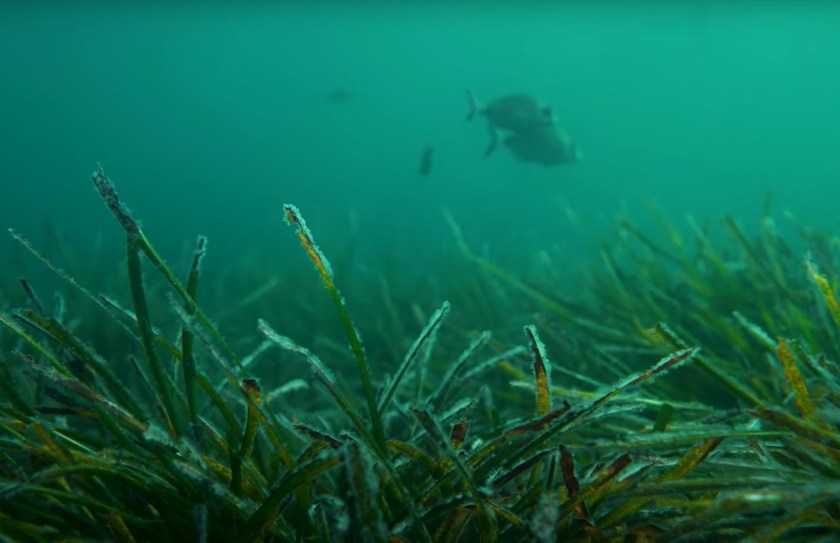
Figure 1. Posidonia seagrass growing off the Mediterranean Coast of Spain. See us map it

Continue reading “Weeds and Seagrass: mysterious and underappreciated treasures of the sea”

Professional Spotlight – Dr. Chris Harrod and Chilean Kelp Mapping

Professional Spotlight

The Professional Spotlight series is a deep dive into the global BioBase community where we highlight the unique ways sonar driven mapping is assisting research, conservation and sustainability.

The BioBase team sat down with Dr. Chris Harrod for a look into how he uses BioBase. Chris (from the UK) is a full professor of Fish and Aquatic Ecology at the University of Antofagasta in Antofagasta, Chile. He does a mixture of research, teaching, and administration tasks but our interest with him was the applied research techniques for which he was using BioBase. His research is focused on a macroalgae called kelp (aka seaweed) and its importance as a source of food/energy to fish and invertebrates in the coastal zone. He is also interested in how kelp can function as habitat, food, an anchor of sediment and even slow the turbulent waters of the Pacific Ocean.

Continue reading “Professional Spotlight – Dr. Chris Harrod and Chilean Kelp Mapping”

BioBase EcoSound does Seagrass, Kelp, and Tides Too!

Although BioBase EcoSound was originally developed for aquatic vegetation mapping in inland lakes, users along both US Coasts have helped us diversify its toolbox to now be a powerful coastal habitat mapping tool as well!

One of the biggest challenges of mapping coastal habitats is their tidal influence with depths changing harmonically based on the moon phase and other factors.  Fortunately, however, widespread tide stations and large public databases of tide predictions allow for accurate and precise offsets to georeferenced and time-stamped sonar logs from Lowrance HDS or Elite units uploaded to BioBase EcoSound.  BioBase EcoSound immediately queries the nearest tide station to your upload (up to 75 km) and adjusts your depth and seagrass or kelp biovolume to the Mean Lower Low Water (MLLW) datum every 5 minutes.  Tidal statistics (Avg., start, stop, high, low,) are archived in your account for each trip.

Continue reading “BioBase EcoSound does Seagrass, Kelp, and Tides Too!”

Translate »